Embraer Archives - Leeham News and Analysis
Embraer delivered its strongest first-quarter financial performance in company history during Q1 2026, posting revenues of $1.4 billion — a 31% year-over-year increase — alongside an adjusted EBIT of $94 million at a 6.5% margin, up from 5.6% in the prior year period. The headline driver was the Defense & Security division, which generated $227 million in revenue, a 63% year-over-year surge, with its adjusted EBIT margin swinging from -1.6% to 17% in the same period. The KC-390 Millennium multi-mission transport and the A-29 Super Tucano light attack aircraft led that growth. These results extend a multi-year financial recovery for Embraer following the collapse of its 2020 joint venture with Boeing and the operational disruptions of the pandemic era. Full-year 2025 revenues reached a record $7.58 billion — an 18% increase and above the top end of company guidance — even after absorbing a $54 million hit from U.S. import tariffs.
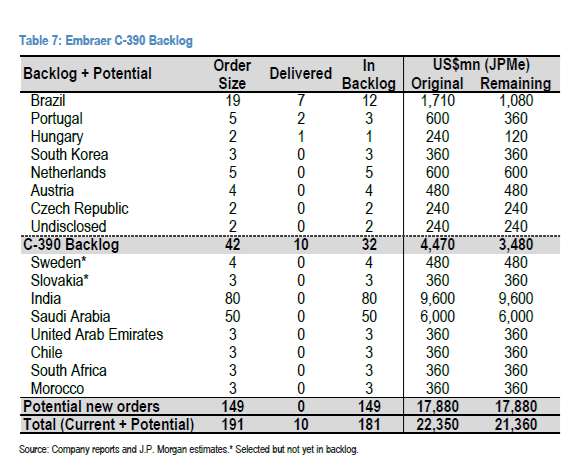
The defense expansion carries direct implications for aviation operators and industry observers tracking global MRO and supply chain dynamics. Embraer's newly signed partnership with UAE-based Generation 5 Holding to develop MRO and after-sales support for the C-390 Millennium in the Middle East signals a deliberate strategy to build regional support infrastructure alongside aircraft sales — a model that mirrors how Western OEMs have long cultivated defense relationships in the Gulf states. The company's plan to ramp KC-390 deliveries from approximately six aircraft in 2026 to ten per year by the end of the decade, backed by potential localized final assembly lines in both India and the United States, reflects broader industrial-base diversification strategies that respond to geopolitical pressures on supply chains. For U.S.-based operators and defense contractors, the prospect of domestic KC-390 assembly represents both a market-access play by Embraer and a potential shift in the competitive landscape for military airlift procurement.
On the commercial and executive aviation side, Embraer's 2026 delivery guidance of 80–85 commercial aircraft and 160–170 executive jets underscores where the company's near-term volume sits. The Executive Aviation segment has been a consistent outperformer, with 2025 revenues up 25% year-over-year and Q2 2025 deliveries up 30% across the combined portfolio. For Part 91, 91K, and 135 operators, Embraer's Phenom and Praetor product lines remain the competitive backbone of the light-to-super-midsize business jet market. The commercial E2 family, meanwhile, is beginning to gain U.S. traction — illustrated by Avelo Airlines' 50 firm orders plus 50 options announced in September 2025 — though the commercial division's results have lagged the defense and executive segments, in part due to supply chain constraints affecting Pratt & Whitney GTF engine availability.
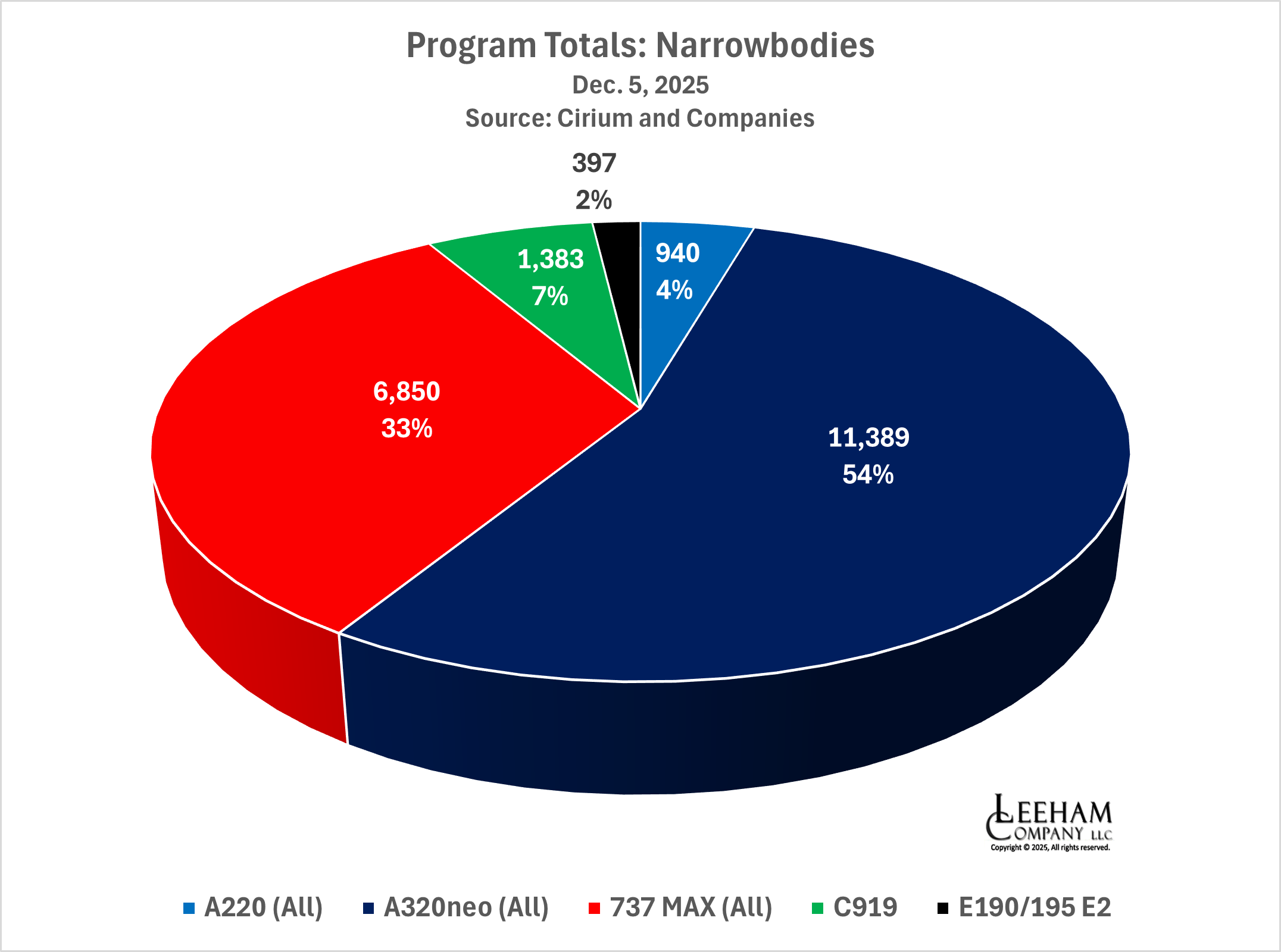
Embraer's positioning as a credible challenger to the Airbus-Boeing duopoly continues to sharpen, though not without risk. Industry analysts at Leeham News have noted that while the company enters 2026 financially sound and operationally stable, the prospect of launching a new mainline-category aircraft program remains fraught — requiring it to compete internally against defense growth, executive jet demand, and narrowbody ambitions, all while Boeing works through its own certification backlog and Airbus remains sold out well into the next decade. A planned 70-to-90-seat turboprop was already paused in late 2023 due to insufficient engine performance gains from suppliers. The broader sustainability picture adds another layer of long-term uncertainty: IATA's 2050 Net Zero targets have been widely acknowledged as unachievable on their original timelines, with sustainable aviation fuel scaling remaining elusive and hydrogen propulsion programs — including Airbus's own 2035 hydrogen target — being quietly pushed back. For airline and charter operators, this means the operational environment over the next decade will continue to be dominated by incremental efficiency gains in conventional turbofan and turboprop platforms rather than transformative propulsion shifts.
For professional pilots and aviation operators, Embraer's record-setting performance signals a manufacturer with the financial stability and product diversity to sustain long-term parts support, avionics updates, and service network investment across both the commercial and business aviation segments it serves. The defense-driven margin improvement reduces the cross-subsidy risk that has historically complicated OEM support commitments during commercial downturns. Operators flying Phenom 100/300, Praetor 500/600, E175, or E2-series aircraft can read these results as positive indicators of fleet support longevity. At the same time, Embraer's cautious approach to new program launches — prioritizing existing product line sales and service expansion over speculative new-type development — suggests the company is managing its balance sheet conservatively enough to weather another tariff or demand shock without the existential disruptions that characterized its 2020–2022 period.









 Read original article