Pilatus Begins Operations In New Composite Center
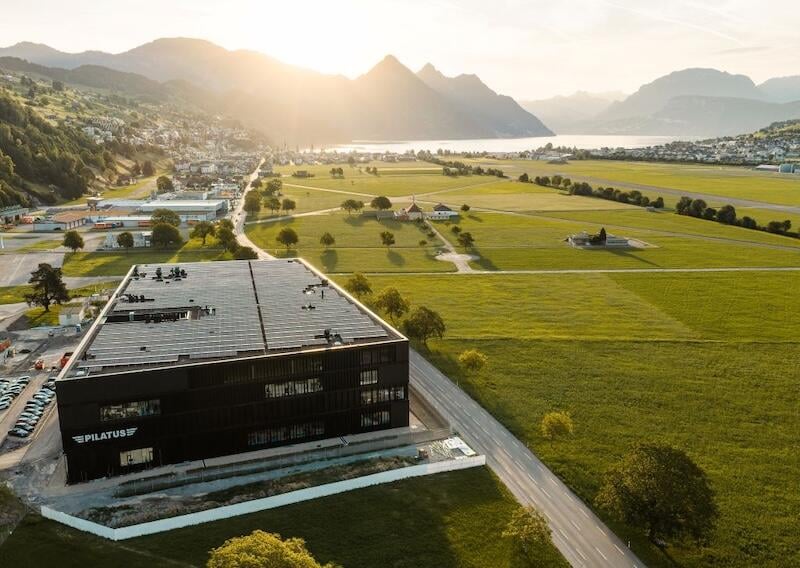
Pilatus Aircraft has commenced operations at its newly constructed advanced composite center, dubbed "Schwarzhorn" after a peak in the Bernese Alps, at the company's home base in Stans, Switzerland. The facility's name and color scheme—evoking the dark tone of load-bearing composite structures—signal its purpose: consolidating and expanding Pilatus's in-house capability to design, engineer, and manufacture composite components for its aircraft lines. With roughly 300 employees, the center represents a substantial investment in vertical integration, a strategy that has become increasingly central to how OEMs manage cost, quality, and schedule risk in an industry still working through the aftermath of pandemic-era supply chain disruptions.
For working pilots and flight departments, the significance of this facility lies less in the immediate operational impact and more in what it signals about Pilatus's long-term production capacity and product roadmap. Composite construction plays an expanding role in modern business aircraft—reducing weight, improving fuel efficiency, and enabling more complex aerodynamic shapes than traditional aluminum airframes allow. Pilatus's PC-24 twinjet and PC-12 turboprop, both popular among Part 91, 91K, and charter operators for their versatility and short-field performance, rely on composite elements in various structural and aerodynamic applications. A dedicated, scaled-up composite center suggests Pilatus is positioning itself to support higher production rates, potential future derivative aircraft, or next-generation designs that lean more heavily on composite materials—developments that could influence delivery timelines, parts availability, and eventually resale values for operators flying these types.
This move also fits within a broader industry trend of manufacturers bringing critical composite manufacturing in-house rather than relying solely on outside suppliers. Bombardier, Gulfstream, Textron Aviation, and Embraer have all made similar investments in recent years, recognizing that control over composite production reduces exposure to third-party bottlenecks—a lesson reinforced hard by the supply chain crunches of 2021-2023 that delayed deliveries across the business aviation sector. By building out Schwarzhorn domestically in Switzerland rather than outsourcing to lower-cost regions, Pilatus also reinforces its "Swiss-made" brand positioning, which has long been a selling point for the PC-12 and PC-24 in the premium end of the turboprop and light-jet markets.
For operators and fleet planners, the practical takeaway is incremental but worth monitoring: expanded composite capacity typically precedes announcements of increased production rates, new variants, or extended aircraft life-cycle support. Flight departments currently operating Pilatus types, or those evaluating the PC-24 against competitors like the Cessna Citation CJ4 or Embraer Phenom 300, should watch for follow-on announcements regarding production capacity increases or new model development that this facility may enable. More broadly, the investment underscores that even in a manufacturing environment still normalizing after years of disruption, established OEMs continue committing capital to vertical integration—a trend that should, over time, translate into more resilient delivery schedules and stronger aftermarket parts support for composite-intensive airframes.






 Read original article